Learn to Think
and Live Differently
“Too often, I watch clients experience shame, guilt, anxiety or depression due to behaviors we are all socially and biologically programmed to exhibit. When we fully integrate our knowledge of the brain and body, our own learning history, societal conditioning, and our trained beliefs, we can re-learn new behavioral repertoires that lead us to a healthier state of resilience, empowerment and wellbeing.” - Gianna Biscontini
A Modern, Integrative Approach to Sustainable Health + Wellness
Behavioral health is reaching new heights as psychedelic medicine and cutting edge neuroscience-supported treatments advance in the West. Never before have we known so much about the intersections of our behavior, beliefs and past experiences, genetics, biology, and energetics. However, while these advancements are truly exciting, high-quality behavioral health services are often out of reach due to a lag in educational programs and current healthcare practices in the U.S.
After more than two decades of dedicated research, clinical practice, and transformative work in human behavior and mental wellness, Gianna Biscontini developed the EXPANDED Method—a modern, innovative approach that goes beyond traditional models. Drawn from her studies and experiences in behavioral science, neuroscience, Buddhist psychology, psychedelic/ketamine-assisted therapy and even quantum physics, this tangible framework empowers individuals as students and mindful observers of their own minds and bodies.
The EXPANDED Method can be viewed as a tangible science — a neurobiobehavioral framework that acknowledges emotions and beliefs, but focuses mainly on using the science of human behavior to actually think and live differently.
Using an advanced model with an individual’s unique desires, stories, preferences and focus as the driving force, many individuals report receiving benefits well beyond previous traditional talk therapy experiences.
The EXPANDED Method
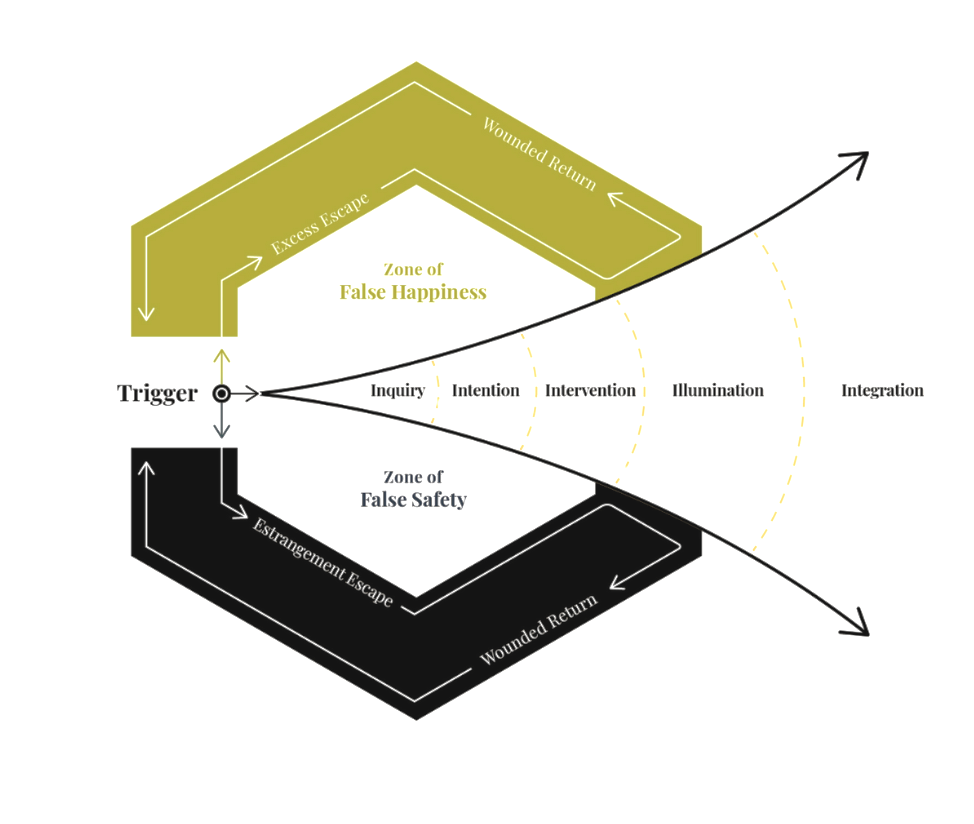
Our brains are wired to protect us through biological stress responses (i.e., fight, flight, freeze, or fawn). While these reactions served us well (and kept us alive) in the past, they often misfire in modern life, treating everyday stressors like toxic bosses, relationship conflicts, or limiting beliefs as actual life-threatening dangers (i.e., being chased by a cheetah).
Our bodies and minds react according to their programming for danger and threat, trapping us in rumination, anxiety, negativity, a preference for sameness/risk aversion, and so on. Many clients with aversive events in early childhood or even adulthood may feel trapped in these states constantly.
This can lead to two common avoidance patterns:
• Excess: Overeating, overspending, scrolling for hours, or other forms of over-consumption.
• Estrangement: Withdrawing, numbing with substances, or distracting ourselves.
Because these avoidance behaviors work in the short term, a phenomena called experiential avoidance, these reactions become habitual, allowing us to avoid pain, discomfort or other undesired states or events. However, in the long run, experiential avoidance is shown to maintain or exacerbate psychological stress.
The key to sustainable, transformational change is to go through discomfort, teaching the brain and body that difficult or unfamiliar circumstances can also be safe and healthy.